One day, on my way back from Shibazakura no Oka (芝桜の丘) – a famous spring park in Saitama Prefecture – I walked along a road awash with Hinoki. Hinoki, (botanical name Chamaecyparis obtusa), also known as Japanese Cypress, is a wood the Japanese treasure and love. In Vietnam, this tree is called Trắc bá diệp. I remember winter days walking the narrow roads of Đà Lạt, sometimes coming across this scent too. Soil and climate make the scent a little different, but the magical beauty of the forest and the sense of serenity when walking beneath the canopy, I think, have much in common.
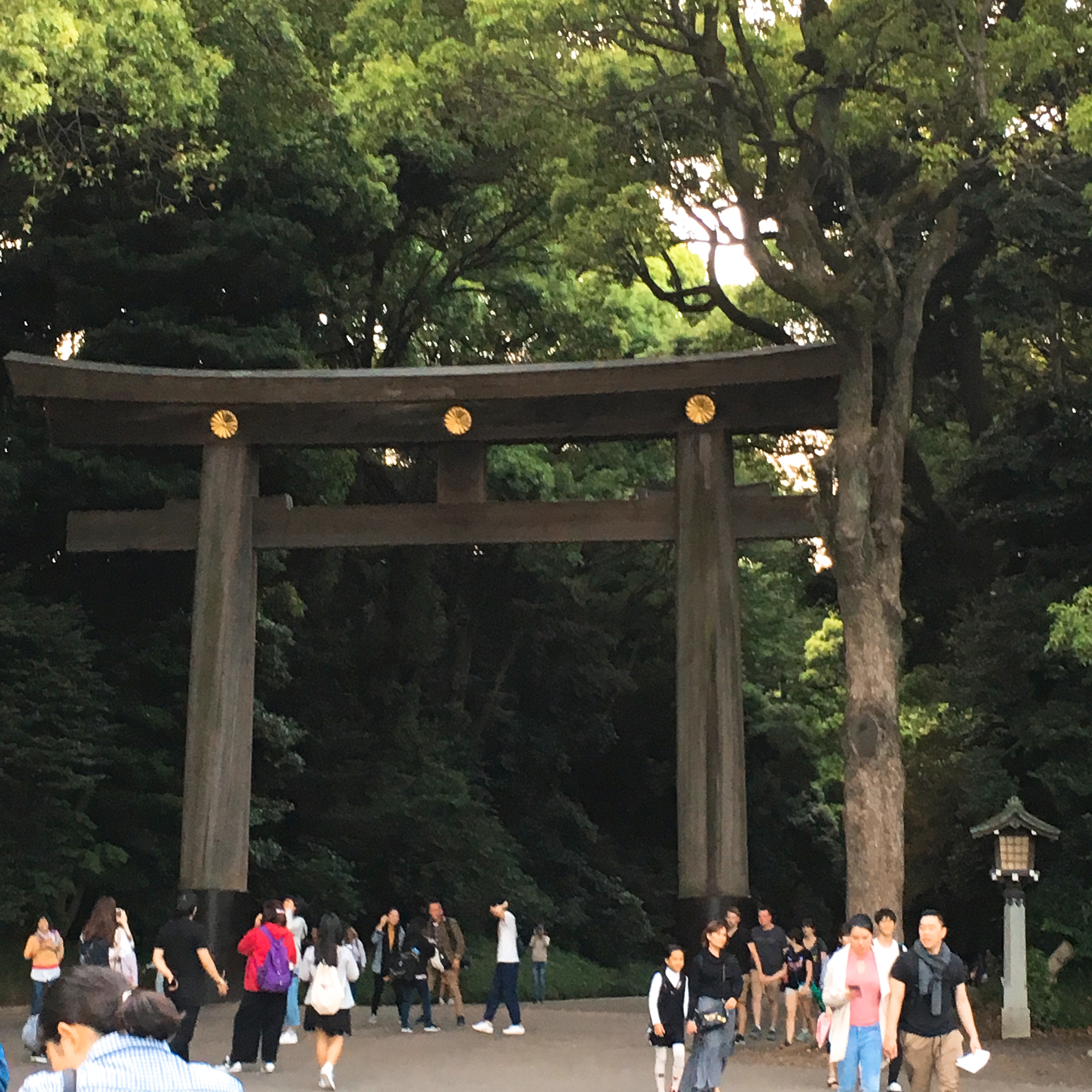
Hinoki trees have been planted for more than 1000 years in many parts of Japan, a country whose forests cover about 60% of its land. Hinoki is closely tied to Shinto and Buddhism (Bukkyou). The Japanese believe in Hinoki’s mysterious power of purification. That is why Hinoki is found in almost all places of worship, shrines, and temples in Japan. As in the photo I took on the first Saturday of summer, the gate of Meiji Jingu in Harajuku is made of Hinoki wood. The scent of Hinoki wood is also a hallmark of incense in Japan. Hinoki is also close to everyday life, cradling it in everything from traditional soaking tubs and Noh theaters to the paddles of competitive table tennis players. One explanation holds that the name Hi-no-ki (日の木) means The tree of the sun – the tree of the sun god. Hinoki holds the soil together for this disaster-prone country, and supports both the spiritual and the material lives of the Japanese. They call it “sacred wood.”
After being sawn, Hinoki wood is dried before use. The inner wood is white, with a characteristic reddish-pink heart. Architects often call it “white wood” – the white wood the Japanese love. Hinoki wood is light yet very durable and highly resistant to moisture. This wood also naturally resists termites, woodworm, and bacteria. Research and practice show that Hinoki wood even grows stronger for about 200 years after being sawn, and only gradually weakens and decays after about 1000 years of use! Temples and shrines built of Hinoki wood still stand serenely after all those years of history. Perhaps it is because of the energy and wondrous purifying power of this wood.
The scent of Hinoki has a little of the sour bitterness of lemon, and a touch of the sweetness and warmth characteristic of wood. It is a wood that still carries living sap and a little moisture, unlike Hiba (Japanese cedarwood), which has a drier, smokier woody tone – something I will discuss in a later post.
What is special about the scent of Hinoki wood is that its fresh wood scent naturally stays beautiful and enduring for a very long time after the wood has been sawn and dried. That natural scent makes buildings made with Hinoki wood always special. Hinoki carries the scent of a forest: green, cool, dewy, and windswept. The scent of Hinoki has a calm, pure quality.
Contrary to what most of us imagine, that it is extracted from the leaves, Hinoki essential oil is extracted from the wood (wood chips/ wood flakes) of the tree. To obtain the oil, Hinoki wood is chopped into chips and then put through steam distillation. In Japan, there is a company that makes Japanese bath tubs (traditional Hinoki wood tubs) and uses the leftover wood from its production to extract Hinoki essential oil. It takes about 12 tons of wood flakes (wood shavings from making the bath tubs) to produce about 12 liters of pure Hinoki essential oil!
Besides its distinctive scent, Hinoki wood essential oil also has positive effects on the nervous system and on health.
- Blend 1 drop of Hinoki essential oil with 2 drops of jojoba or almond oil and massage gently onto the desired area, especially right after working your muscles
- Diffuse Hinoki essential oil in your meditation/ yoga space. The scent of Hinoki enhances and strengthens calm and meditative stillness
- Add 2-3 drops of Hinoki essential oil to a moderately hot bath tub to help the body relax and unwind
I always keep one bottle of Hinoki essential oil to use when meditating, and another to remember my first days of making perfume. To me, the scents of Hinoki and Osmanthus are steeped in Japan. A wondrously fragrant country whose scents are never bottled and displayed in glass cases: the scents of nature, of life. Sacred yet intimate, overflowing.
Just like the very meaning of Koudou – the way of fragrance.
[To be continued]