Suppose someone asked me: what does Japan smell like? Not sakura, ripe apricot or white tea; I would answer without a second thought, “The scent of osmanthus.”
Hoa Quế, Hoa Mộc Tê, Osmanthus: it brings me closest to my memories of small, spotless streets in the middle of bustling Tokyo. Tiny flowers growing along both sides of the road, softly sending their scent into the wind. On stretches of road with osmanthus, I felt people slow down noticeably; a foreigner like me would stop in my tracks altogether. I remember standing there, eyes closed, gathering all my senses to find that scent in my memory. Osmanthus makes me think of Fuurin, the Japanese wind chime; sometimes it feels as if that sound comes from within me, soft and pure.
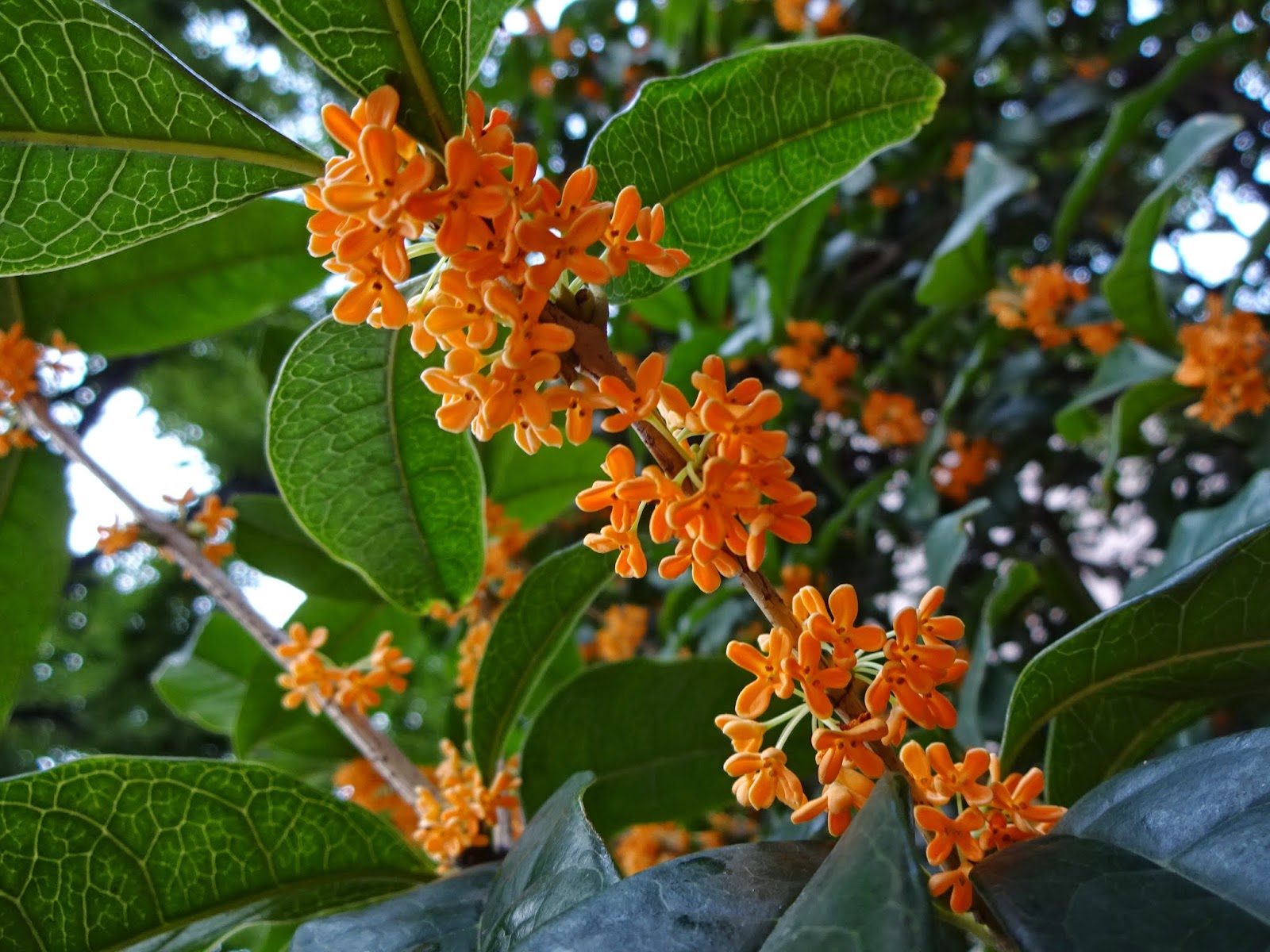
Osmanthus is often known by other names, the most common being Hoa Quế, or Hoa Mộc Tê. Hoa Quế does not mean the flower of the cinnamon tree (quế), but is one of the genera of the family Oleaceae, close to the jasmine family. The flowers are very small and usually grow in clusters, in colors ranging from white and yellow to orange. I like yellow osmanthus best of all. That color is tied to the name 金木犀(きんもくせい) – kinmokusei in Japanese. Osmanthus is not as rich and heady as Gardenia or Tuberose; osmanthus is humble and tiny, and a single handful of blossoms is enough for a fragrant afternoon. In Japan, osmanthus is planted everywhere, along both sides of the road. Depending on the species, it blooms at different times, spread across all four seasons. The scent of osmanthus stirs many emotions, and whichever way those emotions run, it feels truly calming. That must be why China has a city called Quế Lâm (Guilin), named after the flower its people cherish. They call Quế Lâm second only to paradise. A paradise of osmanthus.
Osmanthus is loved by a great many perfumers. I have heard a lot about Amouage Journey Woman, Osmanthus Interdite, Osmanthus by Jo Malone… but allow me not to discuss them here, since I think there are already plenty of topics about them. For the scent of osmanthus, a part of the Japanese autumn in my memory, I would like to share with you “Sonnet” – a creation by Ms. Satori, a Japanese perfumer who has greatly influenced me.
I love the name Sonnet for what it means. A poem. Satori’s scented poem of osmanthus is deeply Japanese: quietly-seeping-fragrant. Ever hazy, yet strangely haunting. Satori’s Sonnet uses an enchanting, complex Osmanthus Absolute, not the synthetic kind of scent out there.
A few notes on Sonnet
Fragrance family: Fruity Floral
Top notes: Sweet Orange, Yellow Mandarin
Heart notes: Osmanthus Absolute, clary sage, violet, rose
Base notes: Sandalwood, Bois de Rose
The composition opens with the clean, slightly dazzling sweetness of the citrus cluster, like summer sunshine, and then the osmanthus slowly emerges amid powder and rouge and a velvet curtain of red roses. The powdery note never feels garish or unpleasant, just feminine enough, gentle enough. The composition lists a Bois de Rose note in the base, which I honestly have not picked out yet, partly perhaps because I have not had the chance to smell this raw material firsthand. But the understated sandalwood is clear, lingering on the skin even after a long sleep (I have a habit of wearing perfume to bed, so that my dreams can be fragrant too 🙂
A little osmanthus scent, to make autumn last longer.