Today I am writing once again about a creation by my teacher – Satori Osawa, the one who inspired in me a love for perfume, and the very idea of a personal style in scent, too.
I never cease to be amazed by the subtlety of the scents that come from Satori’s hands. That perfect balance between the measured restraint of Asia and the open, fresh spirit of the West. Some of my friends like to joke that you Asians make nothing but oranges, lemons and pomelos, so dreadfully boring; I reply that it is only because they have not found the house of Satori yet. An Asian kind of allure, with no need to be drenched in musk or so deliciously rich in dairy and gourmand notes that you want to take a bite (like the ones you all swoon over in Angel). Asian scent from Satori’s hands: the sweetness is different, the bitterness is different, the white florals are different, the saltiness is different. And the oriental character is more different still.
Once I asked her: “Every time I smell one of your scents, I recognize right away that you made it. How do I put my own personal style into a scent?”. She smiled gently and told me, “You have to make a lot, truly a lot, until you have the accords you love. That is what will make your character.” I have never forgotten her words. But then, the accords I love are ones few people love. I am not much for flowers and fruits dangling from branches; what I love tends to lie close to the ground. Mushrooms, the moss growing at the foot of a tree, the smell of rotting leaves, the smell of earth, heady after the rain. Those damp-and-dry, burrowing smells, the smell of soil cradling green shoots. That is why I prefer to design men’s perfumes. And so, I love Mizunara.
As for Mizunara, let me first speak about the name, and its story.
Mizunara – also known as the Japanese oak tree – is a species of tree commonly found in the forests of Japan.
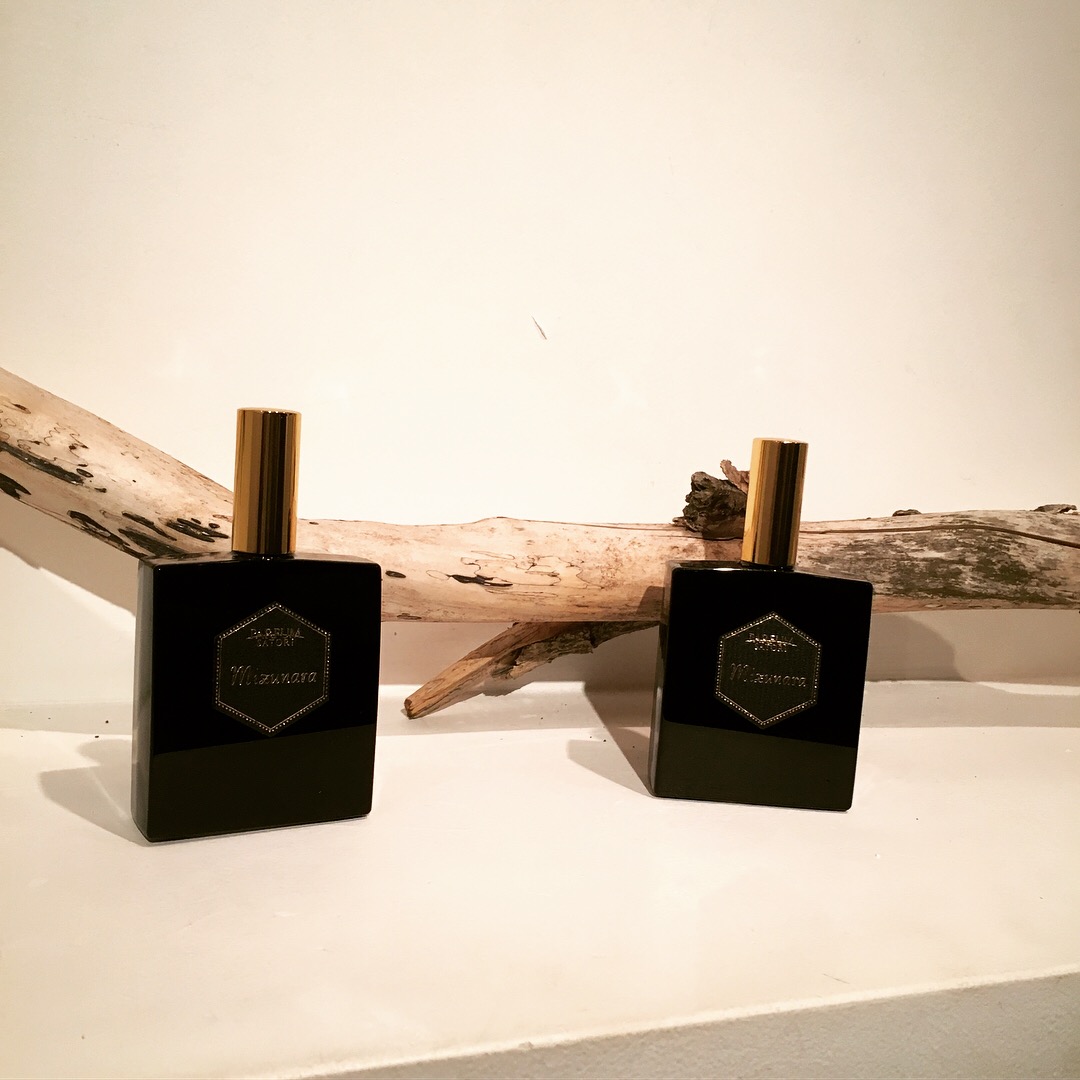
It was also through Mizunara that the world witnessed the spectacular turnaround of Japan’s spirits industry, with the rise of Japanese whisky.
Let us look back at history, to the time of the Second World War.
At that time, Japan could hardly import any alcoholic drinks from America or Europe. That problem became a powerful driving force for the Japanese to develop their domestic spirits industry. One of the most important elements in aging spirits is the barrels, usually made of oak. The barrel’s role is to preserve the spirit, making sure it does not leak during aging. The oak used must be hard and dry enough that the spirit does not seep back and wear it away; in turn, the wood acts as a final leaven, slowly steeping into the spirit and making the maturing of aroma and flavor round and full. Unable to import or use foreign oak for aging, the Japanese looked for a way to draw on a material they already had: Mizunara. Yet after a whole series of trials, the experts shook their heads. Their oak had too strong a woody smell, robbing the spirit of the finesse it needed. On top of that, harvesting and using Mizunara was more difficult, because the tree grows many branches and needs a long, slow time before it can be harvested; Mizunara, at that time, ranked far below foreign oak.
Time slipped by, and once enough years had passed and enough studies and researchers had become involved, people discovered that the aroma of Mizunara only reveals itself in full after 20 years or more. By then, the woody taste loosens and turns warm, steeping the whisky with a Japanese character. A Japanese scent.
Today, Mizunara is ranked among the finest, the most distinctive and the most precious, at the very top of the international whiskey map. The world now searches high and low for Japanese whiskey, with curiosity and admiration. For connoisseurs, the name Mizunara is a symbol of the highest refinement to come out of Asia, enchanting every taste bud of the most demanding tasters.
Mizunara reminds me of Sugi (杉ーLiễu Sam), a wood whose essential oil extraction I had the chance to see with my own eyes and take part in, in Shizuoka, the homeland of this tree. Freshly extracted, Sugi oil is a warm yellow with a rather harsh, rank smell, an old, hard-to-take smell; after 30 days of settling and adjusting on its own, the oil turns clear and colorless, and its scent grows mellow – to me, even mellower and more beautiful than sandalwood.

The beauty of Mizunara is bound up with the beauty of Japan. At first glance utterly ordinary and plain, yet over time it leaves you astonished and full of admiration. Mizunara is bound up with Japanese Whiskey. And the fragrance Mizunara carries that same spirit, too. Mizunara from Satori’s hands has the green of forest trees and herbs, and the tipsy haze of liquor. It makes you fall in love.
Mizunara is by nature a somewhat masculine scent, but it is a scent I am smitten with. To me, Mizunara imposes no gender stereotype at all; rather, it is simply meant for the personalities that suit it.
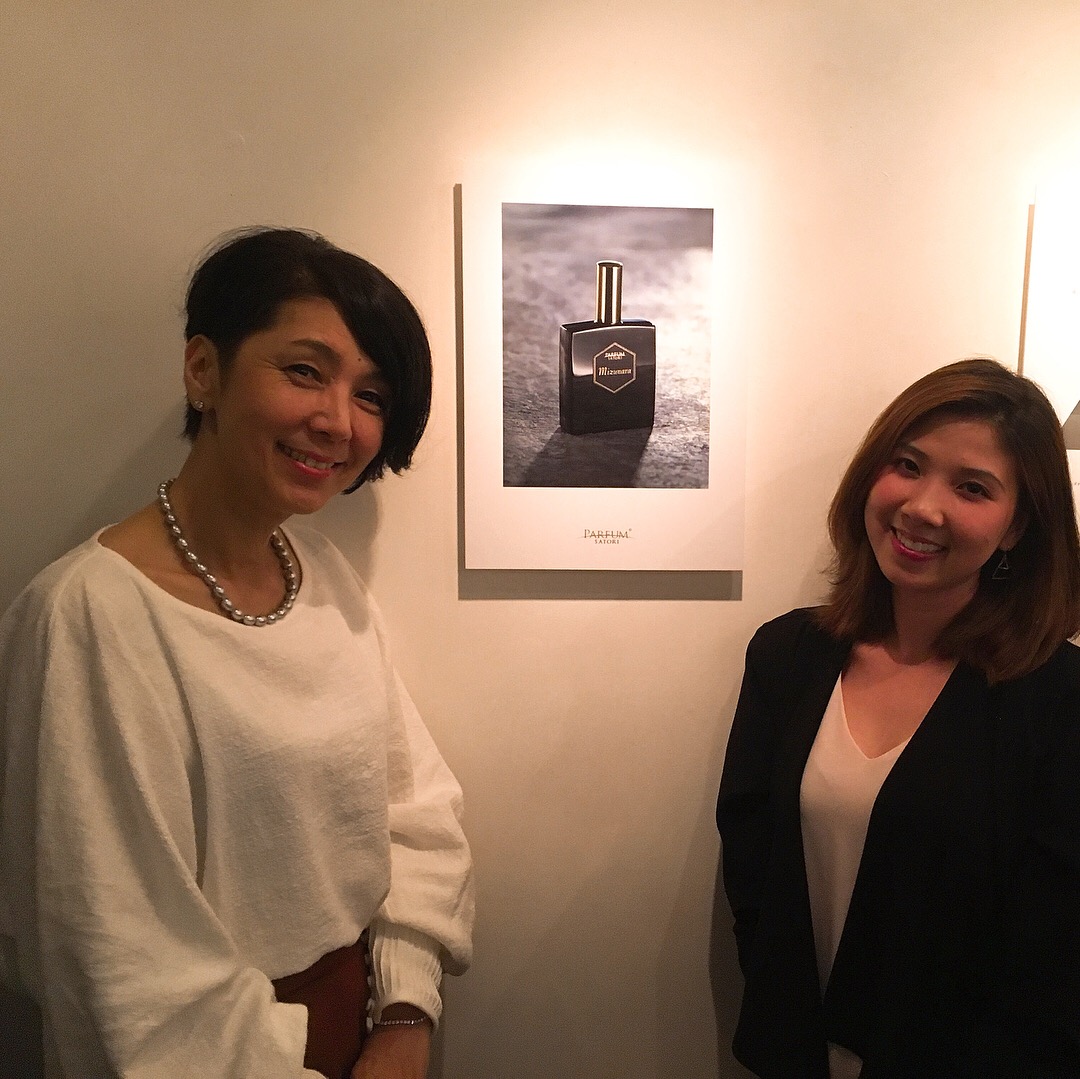
I attended the launch of Mizunara in May 2018. The perfume launching took place in a lovely little room right in her atelier. The small room was bustling with people the whole time from when I arrived. Everyone was waiting eagerly to smell the new scent, one belonging to the green – oriental family.
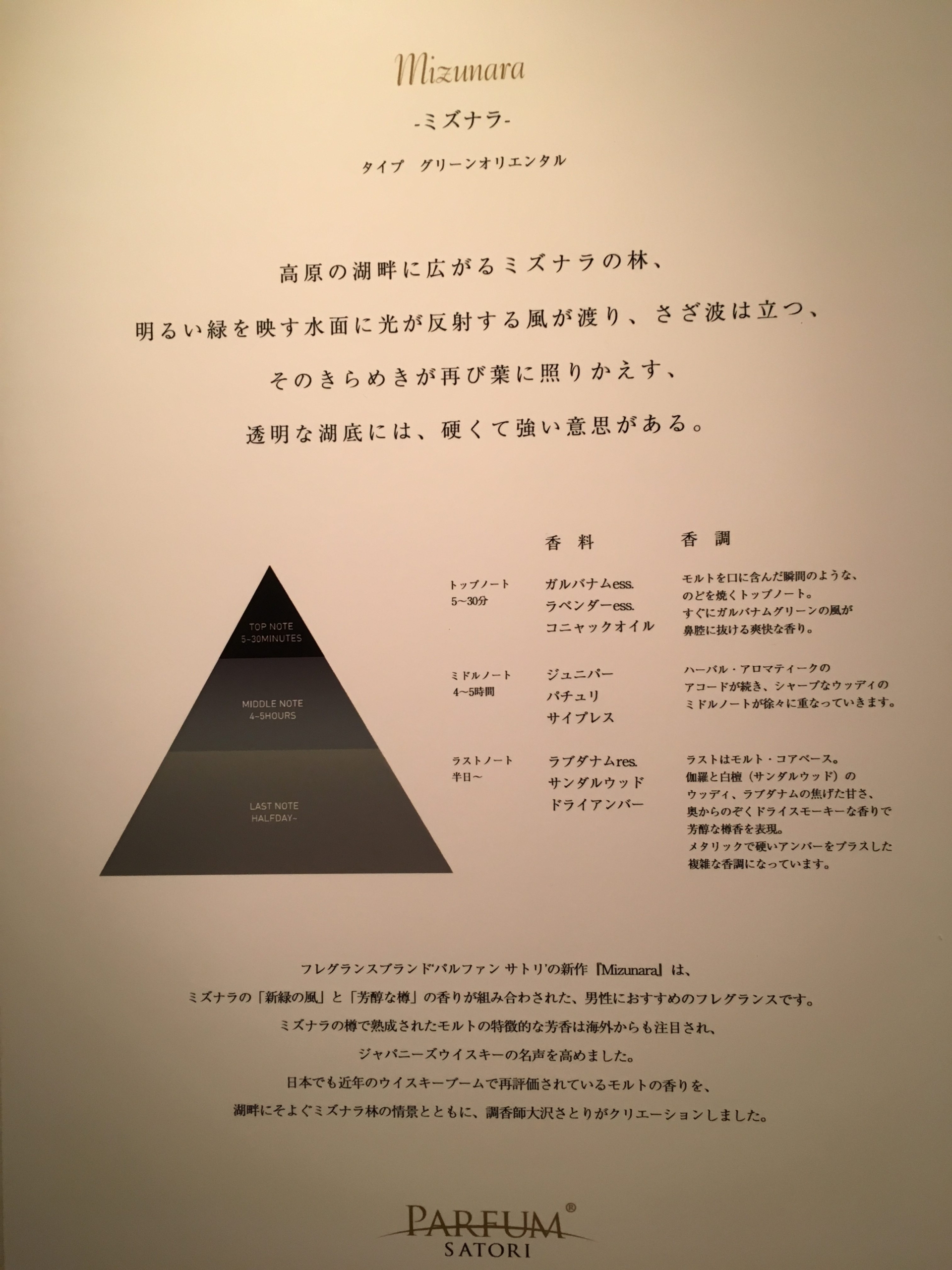
Mizunara was inspired by a time Satori went to a charming little bar in Tokyo, and it was the scent of the wood she sat at that became the inspiration for the creation. By pure coincidence, Mizunara also sounds the same as (水なら), which translates as “like water”. The scent of water, or rather of morning dew lingering on wood, suffuses the fragrance Mizunara.
Mizunara, in Satori’s own words, is a painting in scent of a morning by a lake, with the canopy of a Japanese oak tree reaching out and drooping low, casting its shadow on the water. Mizunara carries a faint hint of cognac, a touch of something metal, very masculine. A man with a glass of liquor in an old-fashioned bar.
Mizunara is cool and aromatic, with a little warmth and boozy sweetness in the finish, that Japanese spirit you can feel from the moment you spray. Mizunara is also, green.
The green note, “green”, is one of the difficult notes. I am not very friendly with scents like freshly cut grass or the tender green of galbanum. My wild childhood had none of the little-girl pastimes like banh đũa or playing house; I was as mischievous and unruly as a boy. And the bout I will never forget, dimly remembered, was a bout of tạt hình, a children’s picture-card game, with the kids from neighbor Mrs. Tiếp’s house. I fell flat on my face, and the raw smell of grass along with a bloody nose was hardly a beautiful scent. You know what I mean 🙂
I am rambling a bit.
What I mean is that Mizunara is green in a very deft way, just tender enough. Galbanum combined with lavender and rosemary gives a fragrant herbal tone, to me a little bit soapy. Actually, linalool, which is abundant in lavender, is a scent that is, in my view, temperamental. But pleasant. Those herbal notes are then wrapped in the soothing warmth of labdanum, sandalwood and amber, which makes the notes soft, truly “velvet” on the skin.
Wearing Mizunara, I have no reference among earlier scents to compare it with. Perhaps my own perfume bank is not big enough yet. But I think it is because the accord Satori created is so new that it can stir such emotion.
In the morning, slip into a clean linen shirt, put on Mizunara. And that is enough for a happy day.
Since its debut in May 2018, Mizunara has been beloved by connoisseurs, and was named by the magazine Financial Times as one of its 5 “Perfume of the year 2018”. Mizunara is currently offered at ¥17,280 for 50ml EDP. Beautiful, and reasonable.
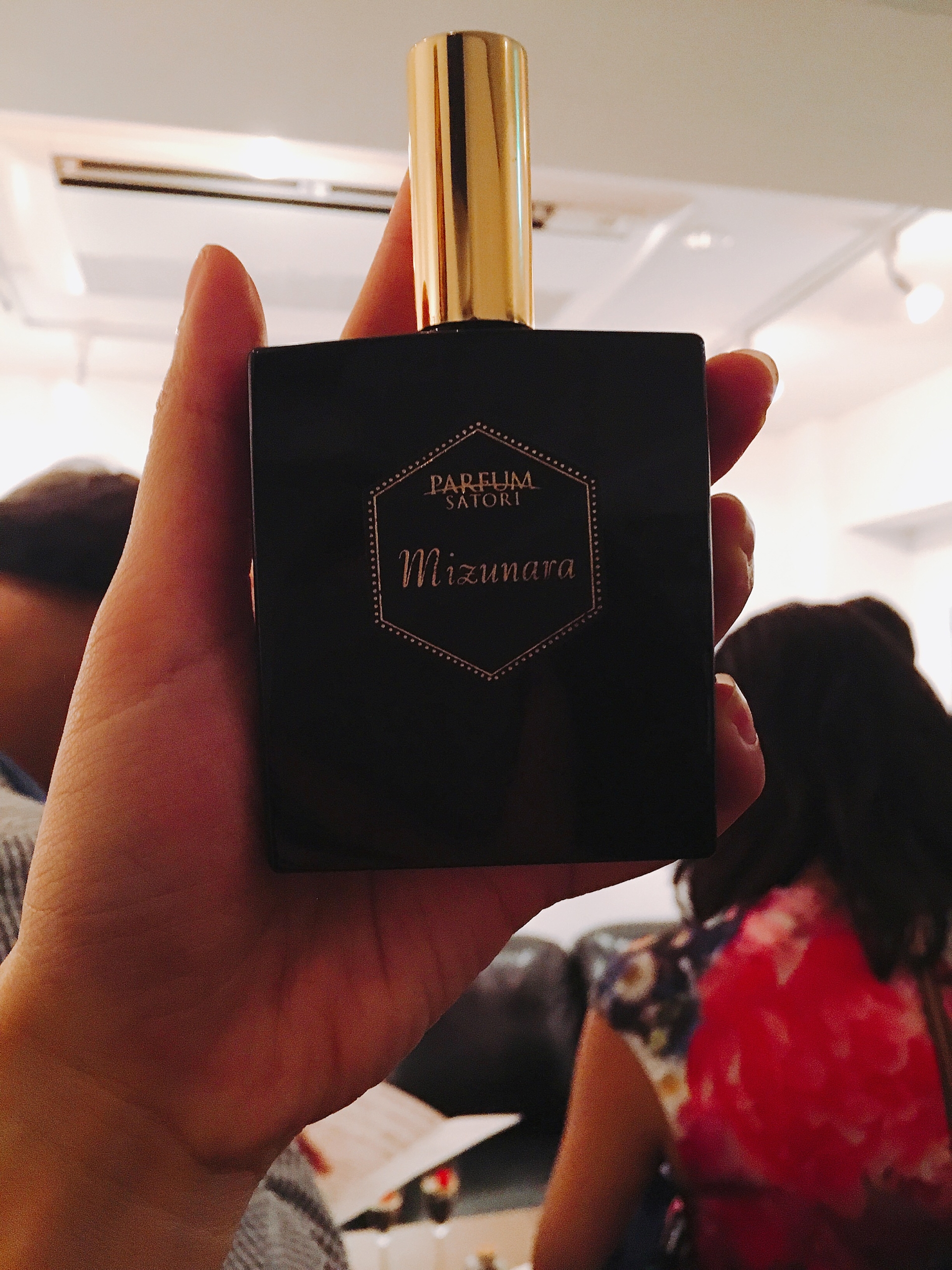
Savoring Japanese whiskey is not enough, boys and girls; the scent of Mizunara from Satori’s hands is something you really must try.
Sài Gòn, April 14, 2019
Rei Nguyễn